UI + AI: Combine user experience design with machine learning to build smarter products – VentureBeat

Machine intelligence doesn’t automatically lead to smarter user experience if product designers and machine learning experts don’t talk the same language.

The language and concepts of machine learning are far from intuitive. And user experience design requires an understanding of how people think and behave, simultaneously taking into account the irrationality of human behavior and the messiness of everyday life.

Because of the different skills these two disciplines require, it’s normal to see user experience designers and machine learning experts work in their own separate silos even though they’re building the same product. Often, experts from both fields are not familiar with each other’s methods and tools and so are unable to grasp what can be achieved by combining experience design with machine learning. To break these professional silos, the product team needs to make a steadfast and conscious effort, but how to get started?

Here are four pivotal principles for finding an efficient and fruitful way to combine the best product design methods with the pragmatic applications of machine learning:

1. Develop a shared language

The product vision, essential user experience issues, and business goals need to be shared and understood by the whole team. You can create an intelligent, truly meaningful user experience only if product design and machine learning development methods feed each other through common language and shared concepts.

User experience designers and machine learning experts should join forces to create a common product development blueprint that includes user interfaces and data pipelines. The co-created product blueprint grounds your team’s product planning and decisions concretely to the reality of user experience: how every design decision and machine learning solution affects how the user experiences the product. A great catalyst for cross-pollination of product goals, design ideas, and machine learning concepts is to get the experts on both fields to work in the same space side-by-side.

Moreover, to build a common language, it’s important for the product team to answer two key questions together. The first question is: “Why?” Why do we choose this user experience design or machine learning solution for this particular use case? The second question is “What’s the goal?” What is the rationale and what is expected to happen when the team focuses on tuning a user experience design detail or optimizing a machine learning model. For example, everyone in the team should be able to perceive why making the copy text more appealing in a marketing notification can yield more immediate impact on user engagement than optimizing the machine learning model to produce more precise personalized content recommendations.

2. Focus on the use case

If you’re building a consumer-facing product, the most important thing is not the technology but the user experience and business goal you wish to achieve.

Map out and crystallize your use case. For example, if you’re creating a personalized onboarding for a news app, the user experience designers and machine learning experts should together draft out and design the actual use flow for onboarding. This allows the whole team to recognize the key points where machine learning could enhance user experience and vice versa. Concrete designs, including input from designers, data engineers, and data scientists, help you set realistic expectations and goals for the first product iteration.

A thorough understanding of the use case enables the team to determine a proper key performance indicator (KPI) for user experience development that is aligned with the metrics of machine learning. For example, if you’re building an AI-powered personalized news notification feature for a news app, your aim is to save users time by sending automated notifications. And you want to gauge if users are happy with the notifications appearing on their lock screen, even though they wouldn’t open the app itself at all. In this case, it’s essential to measure if the users keep the new smart notification feature on and thus continuously receive personalized news alerts directly on their lock screen.

3. Combine qualitative and quantitative data

“Big data” is not always needed to use machine learning effectively. Historical data can even become a hindrance if you believe the answers to the open-ended user experience design questions can be found in quantitative data from the past. Additionally, there are technologies like online learning that don’t necessarily require troves of historical data to get started.

To understand the effects of combining user experience design and machine learning solutions, both qualitative and quantitative data are important. Use qualitative research methods such as user interviews, questionnaires, and user testing to gauge how your users experience the product features. Qualitative data offers clarity on how users think and feel, and quantitative data tells you how people actually behave with your product. Your whole team should assess the results of qualitative studies.

When building a new product or feature, you might bump into many unexpected factors affecting user experience and machine learning development. For example, is a selected data point capturing the real user behavior or intention? Is the feedback loop ineffective for producing meaningful data because the connected user interface feature is not accessible or visible to the user? The combination of qualitative and quantitative methods gives you a wider perspective to answer such questions.

Also, interviews and user tests bring the data alive. They highlight the actual connections between your users and how they are interpreted by your system. In-depth user understanding is essential in picking up the signal from the noise in your data flow. Combining insights based on qualitative and quantitative data enables both user experience designers and machine learning experts to better understand the product as an ecosystem that is part of people’s everyday lives. Everyone on the team becomes a product expert.

4. Confirm your choices with real data in a real-life setting

Does it make sense from a user’s perspective that your smart assistant can independently order pizza, manage your bank account, or book your next vacation flights without you needing to ask it to? How do we make sure that machine intelligence is really used to create more fluent and comprehensible user experiences?

By setting up a working end-to-end solution, you can see how all the parts of user experience and machine learning fit together in real life. A minimum viable product, including working data pipelines and machine learning models, makes it easier to iterate the product together with the whole team and also gives you direct feedback from users through user testing or beta testing. All the feedback should be shared, discussed, and analyzed with the whole team. This lets you see how your product works in the real world so you can identify the most critical things for further development.

When user experience designers and machine learning experts share understanding about product development issues, product iteration is faster and more productive. In the process, your data engineers and data scientists get new insights on how machine learning can be used to understand actual human behavior that doesn’t fit directly into a mathematical formula, data model, or machine learning solution. In turn, user experience designers become more aware of the pragmatic possibilities of machine learning: how and when it can be used to improve user experience in the most impactful way. Collaborating becomes a clear competitive advantage.

Jarno M. Koponen is Head of AI and Personalization at Finnish media house Yle. He creates smart human-centered products and personalized experiences by combining UX design and AI. He has previously written articles on UX, AI, personalization, and machine learning for TechCrunch. 

from “artificial intelligence” – Google News https://venturebeat.com/2019/02/09/ui-ai-combine-user-experience-design-with-machine-learning-to-build-smarter-products/


Four undeniable traits of every mobile app user

Image source: Pexels

Users today are more complicated than ever: they want more, and they want it faster, better, personalized, and easier to use. Their busy, connected lifestyle leaves no room for forgiving usability and performance issues. They will abandon most apps without thinking twice, 21 percent of them after just one launch. With all these user demands, what sets the successful apps above the rest? What can app professionals do to make sure their app doesn’t disappear into the app store graveyard?

The answer lies in understanding users and tapping into their deepest unmet needs. An app team that understands what its users want — even before they know it themselves — is already positioning the app for success. That’s why it’s vital at every stage of the process to acknowledge a few undeniable truths about your users, in order to better understand their needs and desires. This guide will show you how mobile app users have changed and pinpoint several basic needs for you to address.

Image source: Unsplash

A guide to the genus “user”

Users are complicated creatures, but after all, we are all users: we all download and launch apps every day, and we all have preferences that make us delete this app and keep the other. There can be many reasons behind these often-unconscious choices, but usually they can be grouped into several basic traits.

With no time and plenty of options, users are quick to say “bye.”

You can probably empathize with this: users have no time. They want to start using the features as soon as their fingers can tap. This is due to the principle of least effort. This principle has a huge impact on an app’s success. Users are quick to abandon apps that don’t instantly meet their needs, especially since there are plenty of competitors to choose from.

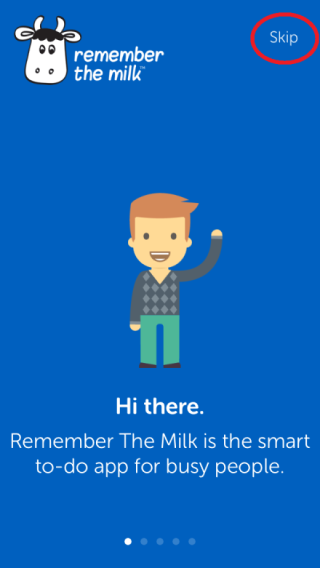
The principle of least effort states that a person “will strive to solve their problems in such a way as to minimize the total work that they must expend.” In mobile apps, this means that users want to accomplish the task they came to do on the app in the minimum number of steps — faster than on desktop. Take to-do list apps for example. Users want to add tasks to their list quickly. An app that makes them go through several steps before the “Add Task” event simply isn’t giving them what they need. Another example is onboarding: many users prefer to skip it altogether, but aren’t given the option.

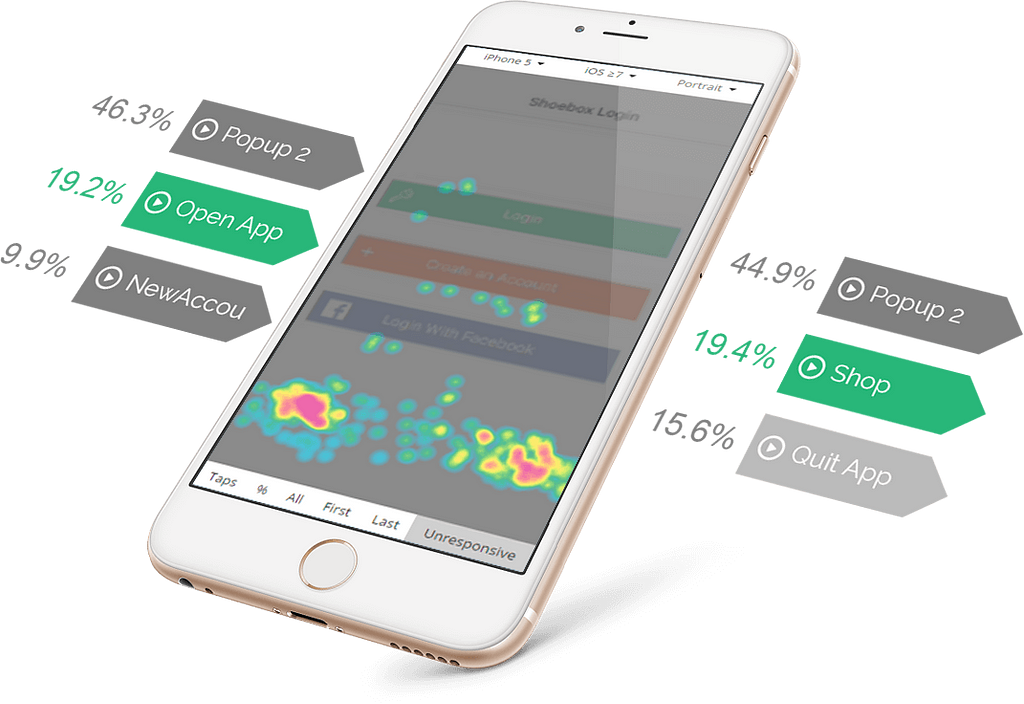
How do you know if your app follows the principle of least effort? By monitoring user behavior and being on the lookout for points of frustration — especially on problem-prone areas like onboarding, navigation menus and payment screens. There are many app analytics platforms that can help you do this well. Following navigation paths is a good way to spot issues with menus and navigation. A detailed conversion funnel analysis will indicate where users are dropping off. Finally, touch heatmaps can spot specific points of user frustration.

Users can skip onboarding and get right to Remember the Milk’s sign up screen. Image source: Remember the Milk

Users have their hands full.

After a decade of smartphone use, our phones are so connected to our hands that we don’t need both to operate them. Depending on the tasks users perform on the app, there’s a lot to consider when planning the size and placement of each element. It’s not just about reach — users have complained that certain elements don’t respond as well to their thumb gestures in general. Also, some mobile app users, such as young children and seniors, will have unique user interface needs according to their dexterity.

How do you ensure a smooth gesture user experience? Imagine when and where your users will be interacting with the app. Will it be on their morning commute, with a cup of coffee in their other hand? Will they be using the app while doing something else, like cooking, playing an instrument or working out? Creating these scenarios can help you in the design stage of your app. Then, from testing to post launch, your analytics tools will help you see these scenarios through.

Apps that rely heavily on swiping gestures, such as Tinder, are designed to be easy to use with one hand. Image source: Tinder

Users are not going to use your app the way you intended.

The fact that an app is designed to be used in a certain way doesn’t mean that the user will use it that way. They might use it for a completely different purpose than you and your design team have imagined. After all, Frisbees were originally meant to hold pies. Some users might download a note-taking app, for example, and end up using it to make shopping lists.

This misalignment of expectations can lead to a common ailment of mobile apps: unresponsive gestures. A user taps the screen expecting the app to behave in a certain way, only to find that this action is impossible. One example is when users try to swipe in order to get to the next screen, but the app’s designers never created such a function. These scenarios can lead to a lot of repetitive, frustrated tap-tap-tapping, users “killing” the app or abandonment.

The spots on this touch heatmap show all users’ unresponsive gestures on the app’s login screen. Image source: Appsee

They don’t trust you.

In a world where security breaches happen even to market leaders, it’s only natural for users to feel skittish when giving their personal information online. One hiccup in the payment process, account creation screen or any interaction that asks for personal details — and they’ll bolt.

How do you make your users trust you? Give them a reason to. In general, to get users to trust you, you have to give before you take. This is called the Reciprocity Principle, and it means giving your users a reason to trust them before you start asking for their trust.

For example, on the often-stressful payment screen, give them signs that they’re safe: a certification badge for whatever payment SDK you’re using and/or an icon indicating a secure connection. Display their total and shipping address at all times. You should also include some friendly, transparent microcopy. All of these will make your users feel that they’re in safe hands — and so is their bank account.

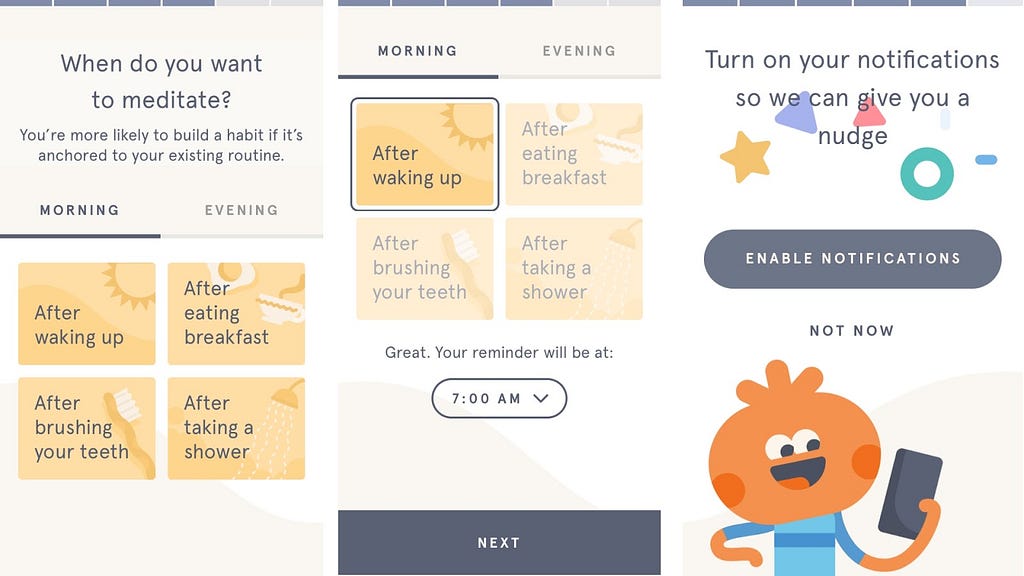
The Headspace app explains why notifications will help them enjoy the app to its fullest, by having users set a reminder for meditation before prompting them with the permission request. Image source: Headspace

Summary

Mobile technology’s lightning-fast advancement has created app users that are picky, tech-savvy and impatient. Mobile app professionals need to keep this top of mind when ideating, designing and optimizing new apps. To create a successful app, they need to get to know their target audience, understand their preferences and desires and address them one by one. By doing this, app creators can tap into previously unmet needs, earning a loyal user base and setting their app above competitors. These initiatives can save an app from disappearing into the app store ether.


Four undeniable traits of every mobile app user was originally published in UX Collective on Medium, where people are continuing the conversation by highlighting and responding to this story.

from UX Collective – Medium https://uxdesign.cc/four-undeniable-traits-of-every-mobile-app-user-f2b445d975a6?source=rss—-138adf9c44c—4

Top Software Development Trends in 2019

Trends change in every arena from fashion to education every day. Similar is the case of software development trends. In fact, in the era of digitalization, software development is one of those fields which is changing at an extremely fast pace.

Every year brings some brand new surprises for software developers. 2018 was the year of complete acceleration for the software development companies worldwide. From blockchain to Artificial intelligence, software technologies have remained a hot topic throughout the year.

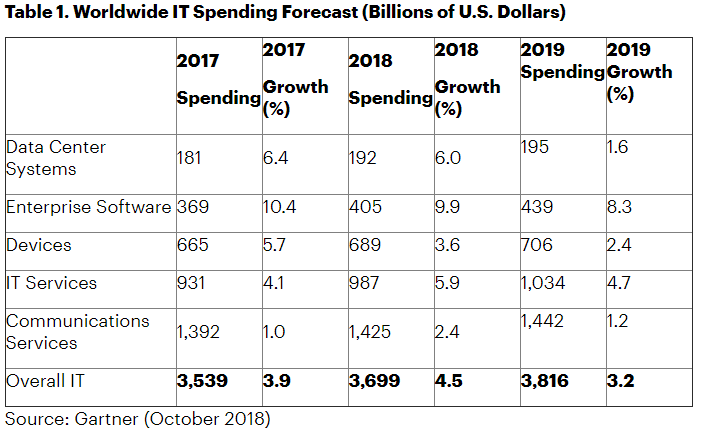
According to a report by Gartner in 2018, the IT industry has seen dramatic growth. It has also forecast growth of 8.3 % in 2019. Below is an image of exact figures from the published report:

The reason behind the growth of every industry majorly depends on the innovations introduced in that field. No static industry can see such remarkable results and this is the hard work of full-stack developers that we can view some awesome changing trends in this industry.

Every year restyling and enhancements in software development technologies are creating new trends. New technologies from PWAs to blockchain are getting a larger market constantly.

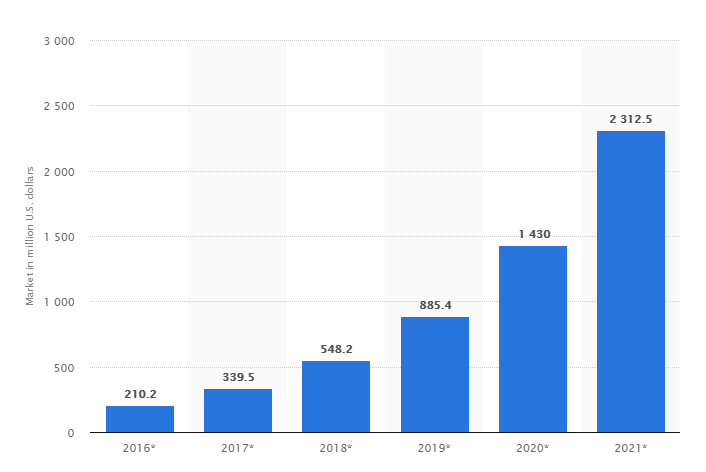
According to a report by Statista, global blockchain technology worldwide is predicted to increase dramatically from the year 2016 to 2021. Undoubtedly, it has become a hot topic in the tech world from the past few years. Here is the statical representation of the same report:

There are many other software development trends in 2019 that need your attention. We are discussing some of the most popular ones here:

  1. Artificial intelligence:

Artificial intelligence is not much complicated to understand for a layman. In fact, every person has some idea about this technology. It involves developing software that thinks intelligently in the same manner as a human.

Today software developing companies are inculcating and shifting to AI as a necessity. It helps to improvise the tasks and increasing the business in the software market. It has reached the fields like healthcare as well which has widened the scope of constant experiments by developers.

2. Blockchain:

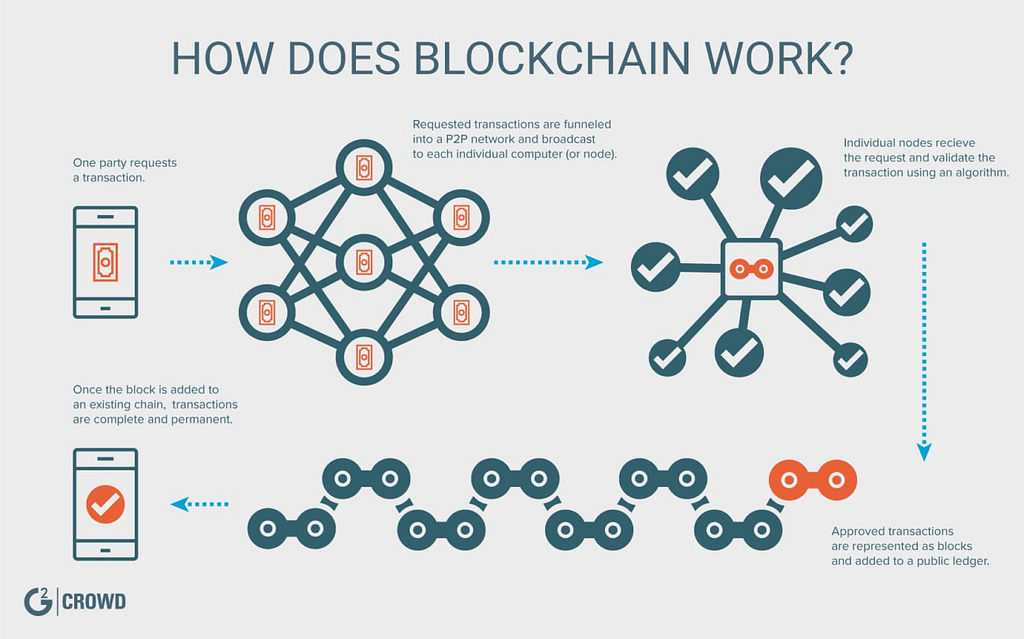
We have already discussed the current scenario and predictions of the highlighted technology in the contemporary world. Blockchain technology relates to simplifying banking transactions like transferring money by creating a single ledger for different parties.

All these services need blockchain software which is why a large number of full-stack developers would be needed to serve in this sector. The advantageous and growing opportunities in this arena have made more eCommerce development companies to extend their arms in blockchain services.

3. Code quality:

As technology is flourishing, it is essential to focus on the quality of your codes and language trends also. The need for the year 2019 is to have a special eye on the development approach as well.

The low code development is also on a rising trend in the software industry. This means that even non-technical employees can be hired to program software by information technology companies.

Every software developing company must have clear development approaches and structures to provide coding to their software. The task type should decide the coding quality and structure solely for the best outcomes.

4. Language trends:

Most of the full stack developers are using Javascript to program the software. The popularity of this language is due to its great adaptivity for hybrid applications as well.

It is essentially vital to choose the correct language to avoid any kind of repercussions in the later stage. There are various surveys that let us know about the popularity of different languages.

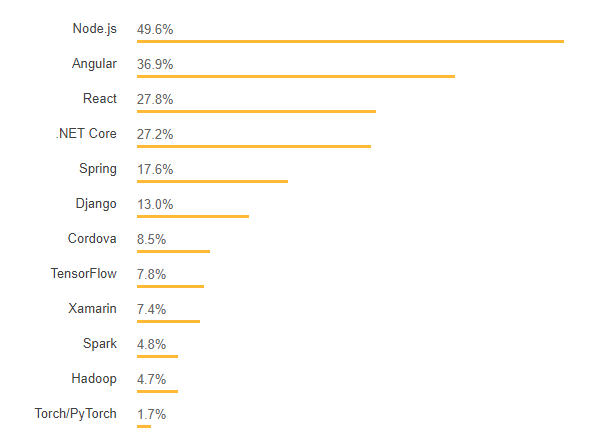
In the stack overflow survey of commonly used programming languages, Node.js scored 49.9% and Angular scored 39.6%. Some other popular languages are React, .NET core, spring etc. Here is the graphical representation of their findings:

This data clearly shows the most used and popular languages which are in trend this year in software developing industries. You can utilize this information to finalize your year plan in software development.

5. Progressive web applications:

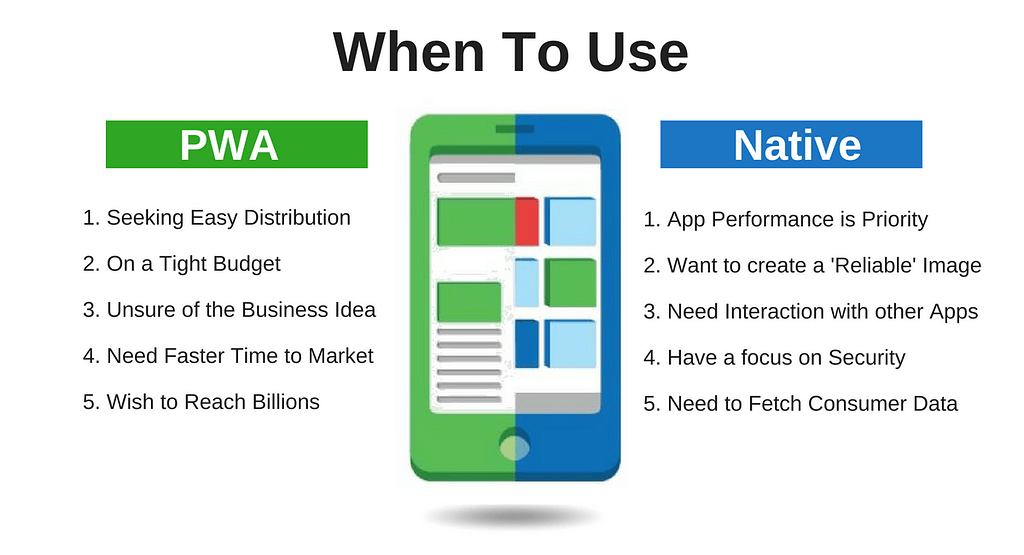
These applications are different from regular mobile apps. You can understand it as a hybrid of web applications and mobile applications. They work on a script called service worker and it is their integral part.

They are faster to load and provides some amazing features like push notifications. PWAs are easy to develop and maintain which is why many mobile app development companies have focussed on them in recent years.

6. Cybersecurity:

Security is an issue in every parameter of human life and this issue spreads its presence in all sizes of business as well. Data and software loss threats have become a major part to look out by software developers.

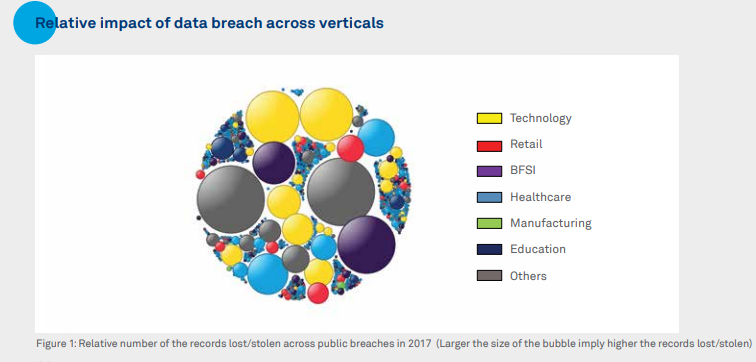
The image below shows the data that has been lost or stolen industry wise in 2017 by a report published by Wipro in 2018.

This report is evidence that almost every industry is facing cybersecurity issues and they all look upon the software industry for support which makes it a trendy service requirement in the IT sector.

7. Outsourcing:

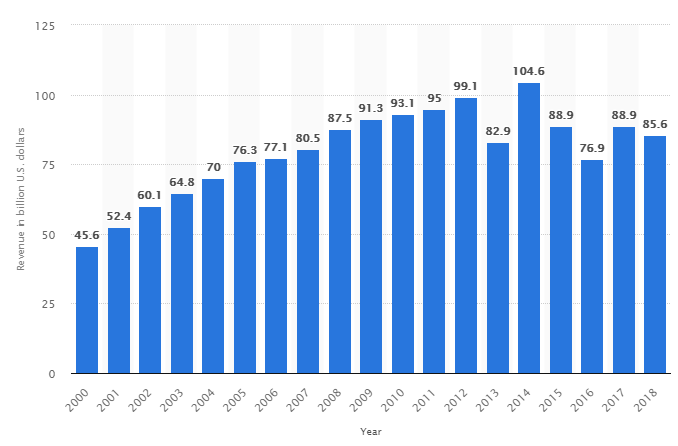
Global outsourcing market is rising every year and has tremendous trends. A survey by Statista shows the global market size of outsourcing services. A graphical representation of the same survey is given below:

This gives a clear picture that the outsourcing market is on a rising spree worldwide. IT industry also has many outsourcing projects as business owners prefer outsourcing developers rather than hiring in-house developers.

Industries in all almost every arena in the age of digitalization have a high demand for full stack developers to look into their software needs. From healthcare to accounting, software requirements are rising with every passing year.

Final words:

These trends very clearly give an idea about the constant research and development that is taking place in this industry. It creates the need for immediate and continual updates on the part of companies and developers.

The software development is working at a full and same pace all over the world. The one thing that every developer must keep in mind is that change is vital and inevitable. Every software developing company must focus on the evolution of the industry and follow the same trend to become a leader.


Top Software Development Trends in 2019 was originally published in Hacker Noon on Medium, where people are continuing the conversation by highlighting and responding to this story.

from Hacker Noon https://hackernoon.com/top-software-development-trends-in-2019-c0bef4a4add7?source=rss—-3a8144eabfe3—4

Dieter Rams’s 10 Principles of Design, illustrated by his products

Every designer alive has heard of Dieter Rams’s 10 Principles of Design–the legendary designer’s quick-reference rules for making products, developed in his early days at Braun. But never has the list been presented with such a strong visual thesis as it is in the documentary Rams, by Gary Hustwit. The documentary was released in select theaters in 2018 (read my story on it here) but Hustwit recently shared this intriguing new clip online. It’s a fascinating, four-minute thesis about how Rams articulated his design philosophy through consumer products.

In the documentary, the 10 Principles of Design sequence feels quite different than what comes before or after. While Hustwit films Rams himself with a locked-down tripod, creating crisp, impeccably balanced frames, the list breaks out of this stoicism, embracing multi-panel animations and a bit of whimsy.

“I wanted this section to feel different than the rest of the film to try to put a new spin on his list,” says Hustwit.

Rosie Garschina, who was creative director at branding and design firm Trollbäck+Company, led the production of this segment. Her goal was to figure out how to illustrate the commandments of Rams through the objects he designed. Over the course of several months, Garschina’s team storyboarded and concepted ideas, eventually pairing rules like “Good design makes a product understandable” with a butt coming in from off-screen and plopping down on top of Rams’s 740 stool.

[Image: courtesy Gary Hustwit]

The multiple video panels should feel dated, like a trick out of early-1980s broadcast TV segment–but in this case, it works. The panels solve a real problem: “We wanted to make sure, first of all, having the panels provide the opportunity to show more than one functionality at the same time,” as Garschina explains.

Gary Hustwit on set during the shooting of the sequence. [Image: courtesy Gary Hustwit]

Besides, if the list was shot like an Ikea catalog, with one full-frame product and a bit of text, it would just get dull. “To carry you through the experience, we wanted to have a cadence to it that would speed up and ramp down, so there was a consistent interest throughout the whole sequence,” says Garschina, “because it was quite long.”

In any case, the segment is a superb palette cleanser in the film, and a charming visualization of Rams’s ideas on its own–even if those ideas were never meant to be set in stone. If you didn’t catch Rams in the theater, you can buy the film on Vimeo now. It comes to iTunes and Amazon this March.

from Sidebar https://sidebar.io/out?url=https%3A%2F%2Fwww.fastcompany.com%2F90303267%2Fdieter-ramss-10-principles-of-design-illustrated-by-his-ingenious-products

Welcome to the Bold and Blocky Instagram Era of Book Covers

If you’re looking for the most anticipated books of 2019, chances are your search will start with Google and end at Amazon. Chances are even better that one book cover will consistently jump off the screen: Marlon James’s Black Leopard, Red Wolf, its graphic white title entwining with a writhing, jewel-toned print of a shape-shifting beast. This first book in the Booker Prize–winning author’s Dark Star trilogy, a queer, Afrofuturist fantasy series, has already been called the “African Game of Thrones.” (Another tagline: the literary Black Panther.) It’s clearly being positioned by publishers and booksellers as a cultural icon, with a blazing cover to match.

Scroll on through the best-of lists and other titles will pop just as loudly: The title of Pitchaya Sudbanthad’s Bangkok Wakes to Rain gleams in gold letters over a drippy green abstraction of leaves. Helen Oyeyemi’s Ginger Bread shouts in bold yellow against a lightly ombré coral backdrop, its plane broken by a black crow grasping a gleaming tangerine. And Kristen Arnett’s Mostly Dead Things features a twisted, hand-drawn flamingo on a field of avocado green, with the title scrawled over it in what appears to be a fat white sharpie.

from Sidebar https://sidebar.io/out?url=https%3A%2F%2Fwww.vulture.com%2F2019%2F01%2Fdazzling-blocky-book-covers-designed-for-amazon-instagram.html

The Future of Data: A Decentralized Graph Database

Photo by Ander Burdain on Unsplash

A paradigm shift is happening that will change the way companies store, compute and transmit data. This shift will give birth to a plethora of new opportunities, including solutions to the most persistent problems faced by big tech companies and users alike. This article will explore one such opportunity — the creation of the first truly decentralized graph database. In addition to being scalable, cost-effective, and secure, this technology will allow users to manipulate and retrieve their data in a trustless, permissionless way.

This is not another story complaining about large technology companies violating data ethics. Rather it seeks to empathize with both users and companies and understand why they act the way they do, from economical, social and technological perspectives.

The Rise and Fall of Data

The rise of ubiquitous computing has been accompanied by an exponential increase in the rate of personal data production. From checking into social media on our phones to interacting with the Echo device sitting in our apartments, even our most mundane activities produce an enormous amount of data.

The question that isn’t being asked enough is — “What happens to that data once it is created?”. The answer varies from company to company, but in many instances our collective data is being misused by the very companies storing it or being hacked by malicious third parties. Facebook is a classic example: the platform has not only suffered major data breaches, affecting millions; but has also sold data to its partners without explicit user consent.

This is obviously a huge problem for both users and companies implicitly charged with protecting said data. Yet, users are not leaving these platforms and the companies are not making any significant changes. Why?

Users: The Illusion of Control & Ownership

There exist plenty of alternatives to Facebook on the Internet. So why is it that most of its users feel compelled to stay after the latest series of scandals?

I, and many others, believe it is mostly due to the “walled gardens” problem: after spending the last X years on *insert large tech company name here* users have uploaded and amassed huge amounts of data, such as friends, photos, memories, that cannot be easily transferred to a different platform. Users deleting their account means losing access to data that they thought belonged to them, because while they might own the content they post, they don’t own the “relationships” it creates on the platform.

Furthermore, most users are not concerned enough about their privacy, with respect to large corporations, to take action. It’s a trade off; for users’ lack of privacy is rewarded with free services, personalized products and ads. Most users don’t really feel like they have anything important to hide, so they willingly upload their data under the illusion that they “control” it.

The companies that create the products that generate and receive our data for free take a “carrot and stick” approach to data collection. You get additional features if you provide them with your data (hyper-personalization of services), and if you do not click “I Agree” to a 50 page document of Legalese, this may render your already-paid-for device or service useless. If the 21st century startup world has taught us anything, it’s that user experience reigns supreme.

Lastly, let’s face it, there is no guarantee that a newer, smaller, alternative startup with the same services will suffer from fewer data breaches than companies who dedicate millions of dollars every year to security.

Companies: The Advent of Cloud Computing

You would think that companies, on the other hand, would’ve taken significant steps to ensure data security after the last series of high profile data breaches. Yet, here we are, hearing about new hacks every other week.

The advent of cloud computing has led companies to store data in highly centralized data centers. Cloud computing saved companies billions of dollars; however, it came at the cost of having a single point of failure. This also meant that hackers now knew exactly where find users’ data. In the end, knowing that users wouldn’t be able to leave their platform, the decision to trade a little bad publicity for billions of dollars was an easy one.

Tech companies have also gotten into the habit of selling user data to their partners without requesting explicit user consent. Is this a problem users can even avoid? Users pay companies for their free services with their attention and time, by watching ads, and with their data. Some great projects like Solid, spearheaded by the inventor of the World Wide Web, Sir Tim Berners-Lee, are looking to solve this problem and are pushing for true control over our data.

However, Amazon, Google, Facebook and Apple — the “Big 4” of tech — have a monopoly over our data and have no intention of relinquishing this measure of control. Big tech companies are disincentivized to grant users total ownership and control of their data, as doing so would not only bring down those “walled gardens” but would sever another important, if not dominant, revenue stream: the ability to sell your data and the insights generated from it at no additional costs.

In the end, all of the decisions that have and are being taken are rooted purely in economic reasoning, as they often are with public companies.

A Paradigm Shift: Speed, Security & Cost

A paradigm shift is happening in the tech world that will change how companies store their data. Google and other tech companies are starting to hit a bandwidth wall within their own data centers. Simply put, they are reaching their maximum capacity when it comes to processing and transporting data.

On the other hand, every year, the personal computing devices surrounding us are becoming more and more powerful; many of these devices sitting idle most of the time. When connected in a coordinated way they can, and will, outperform any current data center in terms of speed, security and most importantly, cost.

Harnessing effectively the unused computing power of these devices wouldn’t spell the immediate end of the Cloud Computing era but would rather complement it, especially for latency sensitive tasks. It would also, however, announce the birth of the “Fog Computing” era (coined by Cisco in January 2014).

Fortunately, because Fog Computing relies on decentralized networks, it is also theoretically much harder to hack, thereby solving the security problem.

Fog Computing versus Cloud Computing

At a high level Fog Computing will initially work exactly like Cloud Computing for Big Tech companies: users will create, read, update and delete their data by submitting a request to the company who will in turn pass it on to the decentralized network of devices. This is the way things were done when Cloud Computing was king and there is no immediate apparent reason to do otherwise.

However, as we saw before, one of the main reasons people are staying on their current platforms is because no viable alternatives exist that would guarantee a better outcome. Fog Computing makes that assumption obsolete. Your data is now stored on thousands of devices across the world; and therefore, rather than passing through an intermediary such as a Big Tech company for your data, you can directly make request to the network of devices. A permissionless, trustless way to access your data.

This also means that by corresponding directly with a decentralized network, you can decide with much more granularity who has access and the rights to use your data: the Holy Grail of data ownership.

Why would the Big Tech companies want to allow you to communicate with the decentralized network then? Well, long story short, they don’t. However, this technology is being built and will readily be available to the public. Competition that offers this type of data control at scale will emerge, and since Big Tech companies’ data centers will not provide them with the same competitive advantages they do today, their entire business model will be in danger of being disrupted.

They will be forced to offer their users granular data control in order to stay competitive. This means giving users the option to either monetize their data, give it away for free or refuse entirely to have it used for any other purpose than the core services offered. This sacrifice’s cost pales in comparison to losing users entirely to competitors in the same market.

Blockchains Revisited

Blockchains have recently entered the spotlight as the first technology making use of decentralized networks of devices. Promising users full ownership and monetization of their data, blockchains are ostensibly compelling alternatives to legacy third party data farms. So why aren’t we all using blockchain technology? I believe this is simply because we misunderstand what blockchains are supposed to help us with.

Blockchains have been lauded as secure, immutable and transparent databases. Yet a blockchain can only hold very small amounts of data without having the computers hosting it run out of memory, and becoming centralized. Furthermore, blockchains are extremely hard to query; this is partly because data is stored in blocks with varying time stamps, but also because there exist no “easy” innate querying languages. Simply put, it is neither efficient nor easy to search blockchains for information.

Imagine a medical company needs to access blockchain data as fast as possible, it would likely first move the data to an efficient third party database, then execute its queries; thereby completely destroying the concept of decentralization. Blockchains are best suited to payment or purely transaction-based systems.

Indeed, that is what they were initially invented for: Bitcoin, a payment system with a relatively small digital footprint. While blockchains make use of the growing movement of increasingly powerful personal devices, they have a relatively narrow use case and do not make use of the paradigm shift’s full potential.

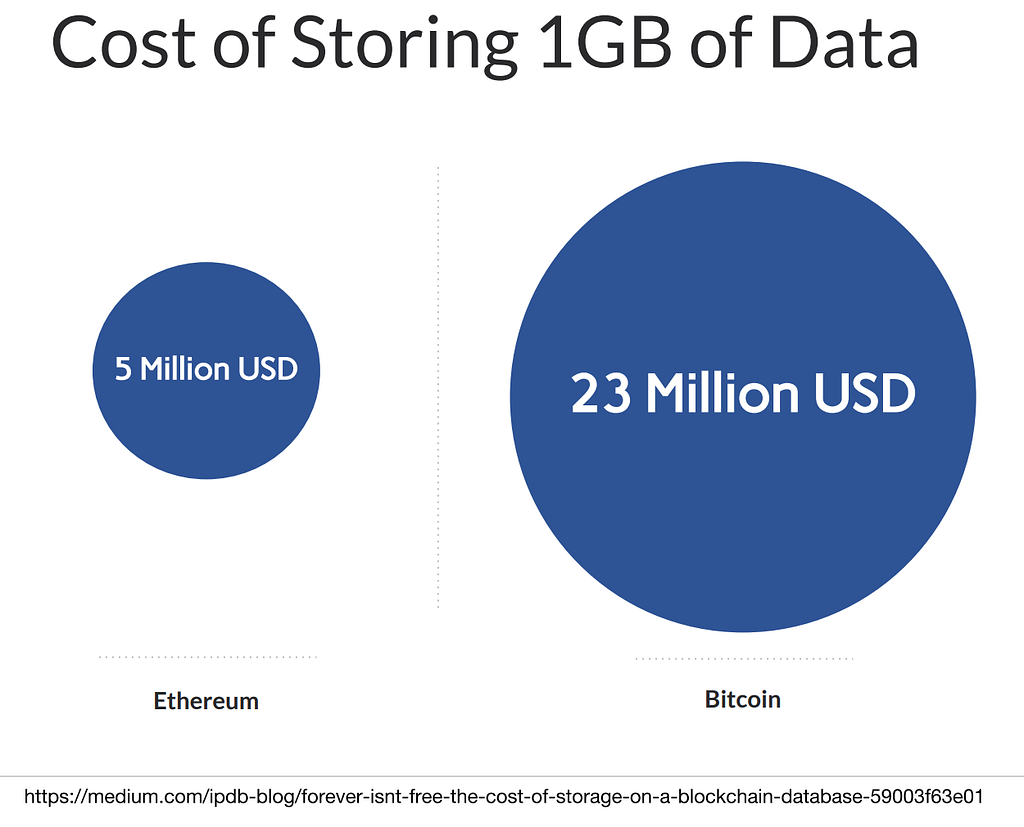
This is not to say that all blockchains are useless in the quest for more control over our data. A much broader use case emerged for blockchains when Ethereum was born.

As you can see on the left, the prices for storing data on it are still outrageous. However, it introduced a revolutionary new concept: smart contracts, which, as we will see later on, are extremely handy when used in conjunction with decentralized storage solutions.

A Decentralized Graph Database

In order to accelerate the transition to the future described above, where each user is granted new levels of data ownership and control, we also need the associated technology: a decentralized network of devices that users can communicate with directly. Amongst its other features it should be private (for user data when needed), scalable (in terms of storage and computing power) and trustless (you don’t have to trust a central authority to access your data or to maintain its security). It would serve as the backend for products that could rival the user experience provided by Big Tech companies.

I had been thinking for a while for a solution to this conundrum, and, while working for Graphen, I produced a whitepaper (with the help of Columbia University Master students Peiqi Jin and Yang Yang) for a decentralized database.

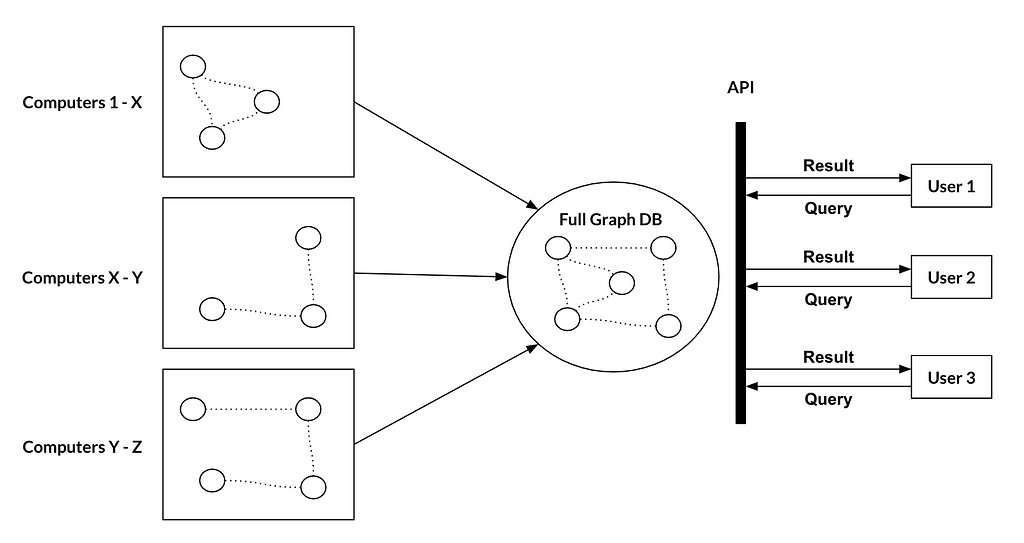
This decentralized database functions exactly like a cloud database from the developer’s perspective; however, it is hosted on a completely peer to peer network. It is not a blockchain, but leverages some of the same cryptographic algorithms, such as Patricia-Merkle trees. I won’t expound on the technical details, the whitepaper is there for that, but it essentially consists of three parts:

  • The workers, who rent out storage space and computational power to host fragments of the database and compute queries. They are called masternodes and receive monetary rewards such as US dollars or cryptocurrencies in exchange for their hardware’s time. They are also incentivized to periodically check each other’s data and query results in order to guarantee the correctness of the overall system.
  • The users, who are usually developers or scientists, that create the databases. They are the ones that usually pay the fees to the masternodes.
  • The users that contribute data to a given database, through an app or directly, via requests to the masternodes. They can be the same as the previous users. They are also provided with a private key that allows them to retain full ownership of their information (the ability to request, delete or update their data with a request to the network without the permission of a third party).

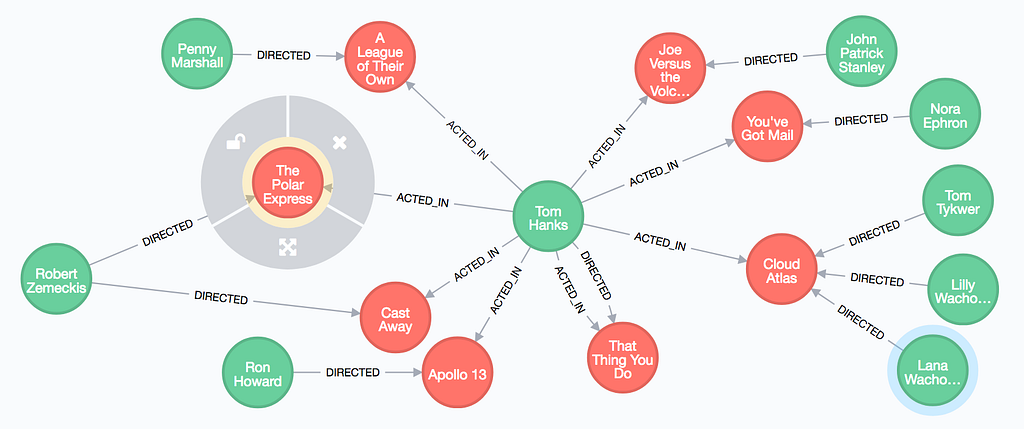
I believe that graph databases are the future. With each passing day our world is becoming more interconnected, and so is the data we produce. Graph databases’ speciality lie in accommodating these relationships. Furthermore, all other “types” of data fit in graph databases: unstructured and structured data, while more efficiently manipulated in non relational and relational databases, respectively, can be stored in graph databases too (the converse is not true, eg. graph data cannot be stored in a non relational database).

https://wilsonmar.github.io/neo4j/

The applications of graph databases have been increasing significantly over the past few years. For example, graph databases are already being used by Facebook for their social media platform, by Stripe for fraudulent transactions, by Amazon for product recommendation and by companies all over the world for big data analytics in various domains and problems.

Graph databases are extremely fast, scalable and can generate incredible insights from the data they contain; which is why I chose them first to be implemented as decentralized, distributed databases.

This decentralized graph database fulfills all of our aforementioned necessary features: scalability, trustlessness and privacy (by using a specific type of homomorphic encryption).

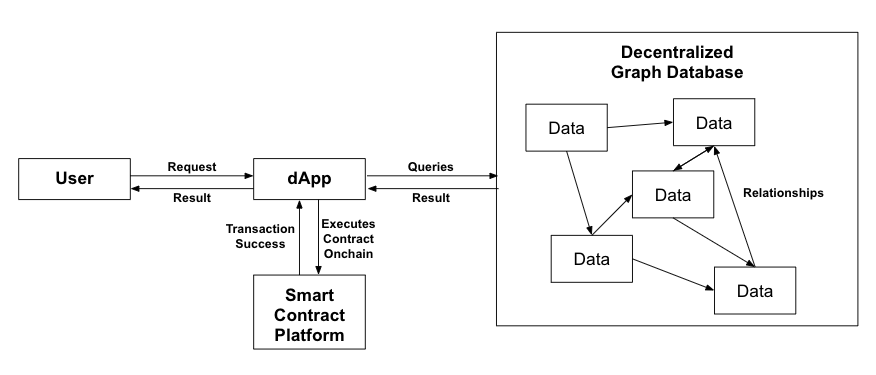
This is a very high level overview of what the data flow looks like:

A Truly Decentralized Internet

If we look at current Web 2.0 applications, we have a frontend, a backend and a database. While it doesn’t make much sense to decentralize the frontend, the backend logic can and should be decentralized. This is where smart contract platforms come in. Turing complete (theoretically able to solve any computation problem) smart contract platforms such as Ethereum, EOS or Cardano have the capability to support this logic with their native programming language. They can even correspond with the graph database to retrieve relevant data in a truly decentralized manner.

Ultimately, if this technology matures as intended, it could even become the very basis for the new semantic Internet Tim Berners Lee, the inventor of the Internet, describes in his Ted Talk.

“So, linked data — it’s huge. I’ve only told you a very small number of things.

There are data in every aspect of our lives, every aspect of work and pleasure, and it’s not just about the number of places where data comes, it’s about connecting it together.

And when you connect data together, you get power in a way that doesn’t happen just with the web, with documents.”

Thanks for taking the time to read this article! The whitepaper is available at www.graphenprotocol.com. Please don’t hesitate to contact me at mgavaudan@graphen.ai with any feedback or questions you might have.

We are in the process of raising money for a Graphen subsidiary that will specialize in this technology, so if you are an investor please email me for our pitch deck.

I’d also like to thank Dr. Jie Lu, Dr. Ching-Yung Lin, and all my other friends (Matteo, Kai, Haley, Kevin, Srikar, Eric, Lizzie…) for their help and feedback throughout this process.


The Future of Data: A Decentralized Graph Database was originally published in Hacker Noon on Medium, where people are continuing the conversation by highlighting and responding to this story.

from Hacker Noon https://hackernoon.com/the-future-of-data-a-decentralized-graph-database-bbb668715bd1?source=rss—-3a8144eabfe3—4

Never feel overwhelmed at work again: how to use the M.I.T. technique

Have you ever felt exhausted after a day at work? At the end of a busy day, you couldn’t remember how you spent your time. All you knew was that there was more to be done tomorrow. You were tired, overwhelmed, and even a bit frustrated — the to-do list always out-ran you.

You might have wanted to review your day and see how to be more productive. But the pain you had in your head from a long day was so strong that all you could do was drag yourself home and collapse on a couch until it’s time for bed. The next day, the same story repeats and it’s a never ending cycle.

That was my life over the past few months. As my role evolves, coding is no longer my sole responsibility. My days often consist of a mix of interviewing, various meetings, code reviews, ad-hoc discussions, and coding. Often, at the end of a day, I feel like a failure because I didn’t make as much progress on my project as I had wanted to. All I could think of was all the remaining work that needed to be done, which could be discouraging since I never seemed to be able to get to the bottom of the to-do list.

This troubled me for a long time. I knew objectively that I worked harder than ever. After a day of hard work, I deserve to feel accomplished and proud.

How the M.I.T technique helps me

Things changed after I discovered the M.I.T. technique: a powerful way to keep me focused and productive throughout the day.

A Most Important Task (MIT) is a critical task that will create the most significant results. Every day, create a list of two or three M.I.T.s, and focus on getting them done as soon as possible. Keep this list separate from your general to-do list. – The Personal MBA

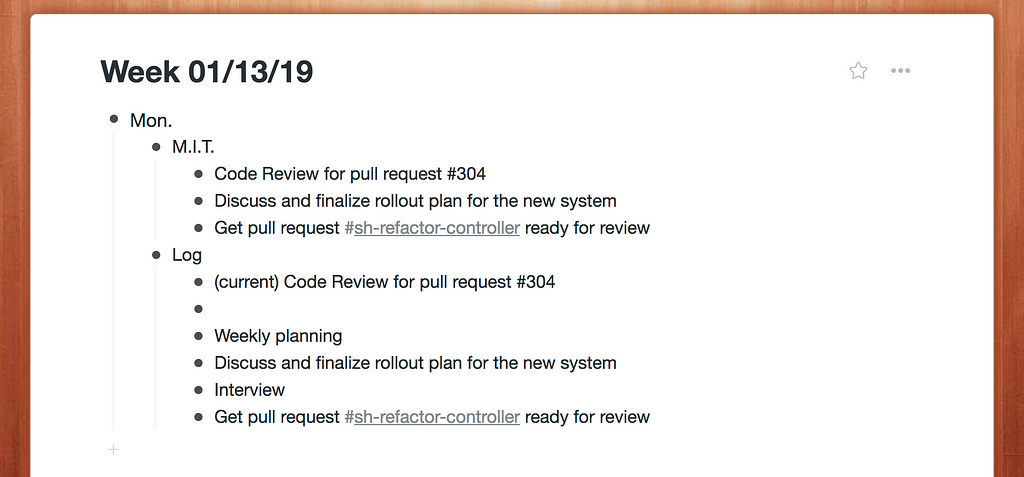
Here is how I apply it to my day-to-day work. After I get to the office, first thing in the morning, I open my note-taking app (I use Workflowy). First off, I start a new section for the day and write down two to three most important tasks I want to focus on and get done under the M.I.T. section. Then I list out tasks, both M.I.T.s and non-M.I.T.s, in the order I plan to do them under the log section. I then check my schedule for the day and plan blocks of time for the M.I.T.s. I will try to get them done as soon as possible.

Lastly, before actually starting to work, I tell myself as long as I get the most important tasks (M.I.T.s) done, it’s a productive day that I should be proud of. Finishing these tasks is my definition of success for the day.

Here’s an example of how my note will look like:

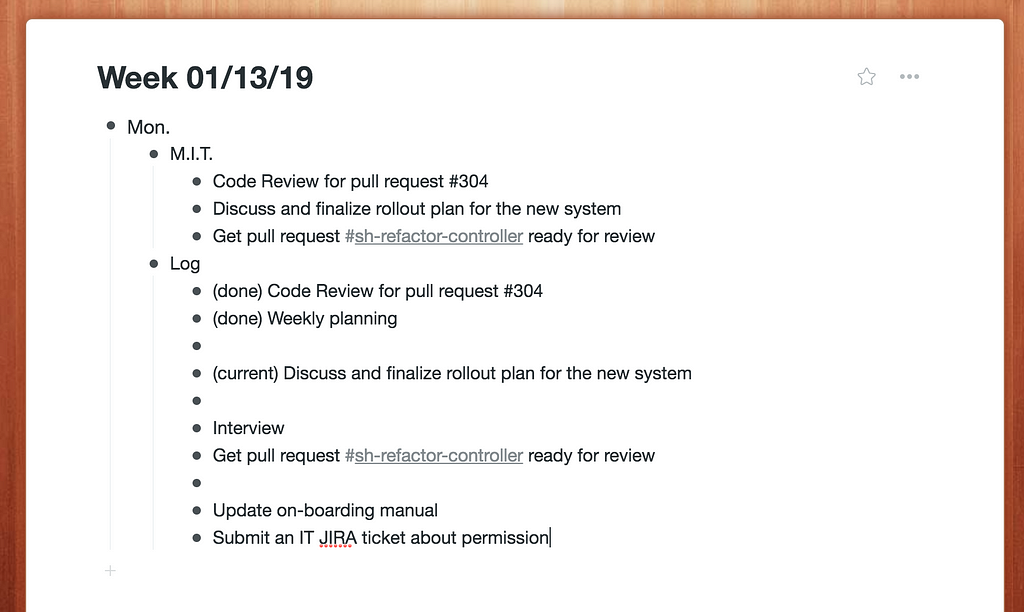
As the day goes, new tasks come in. According to their urgency and importance, I add them to the log section. Here is how it might look like in the middle of the day:

My M.I.T.s for the day are flexible and can change. It’s totally fine if I need to swap a M.I.T. with a new one or even decide to not work on it and move it to another day altogether.

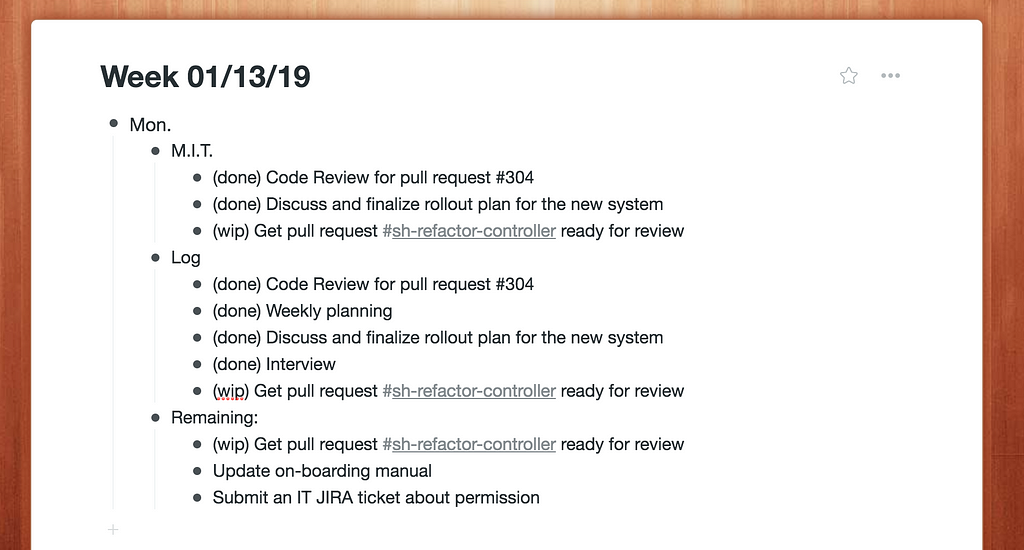
At the end of the day, I will update the progress of all the tasks, especially the M.I.T.s, and leave a note for tomorrow.

Here is how it might look like at the end of the day:

It feels great to be able to see all the tasks you worked on and how you spend your time at the end of a hard working day. (I also create a Google calendar event to log how I spend my time after I finish a task.)

Three great benefits of this approach.

  1. Listing M.I.T.s at the beginning of a day sets the tone for the day. The M.I.T. list is an anchor of my day. It keeps me focussed and calm. No matter how many meetings I have to go to or how many ad-hoc tasks pop up, I always return to my M.I.T. list and remind myself these are the focus of my day. If important things come up, I evaluate them with my M.I.T. list and update the list accordingly.
  2. Reviewing my log at the end of the day is an opportunity to reflect on how today went and identify areas of improvement. Besides that, it’s a time to celebrate all the tasks I accomplish and feel proud of my hard work. Software development is a marathon, not a sprint. It’s important that we regularly acknowledge the great work we have done and celebrate the small successes we have along the way. Before using this technique, I often felt overwhelmed and discouraged because I was too focused on the end goal and all the remaining work and failed to acknowledge the progress I made. This technique helps me enjoy every step of the journey.
  3. Having a log of how I spend my day makes weekly and monthly planning easier. At the end of each week, I can see how I spend my time and if it’s aligned with my priorities.

There are other areas in which I can improve my productivity and achieve better work-life balance while getting more done. I will explore and experiment with different techniques and share them on my personal blog when I find something interesting. Subscribe if you’re interested and don’t want to miss out!

My career plan for the year is to grow into a tech lead. I’m excited about all the learnings ahead and would love to share this journey with you in a brutally honest fashion. I will be sharing my weekly learnings on my personal blog.

In the next few months, I will focus on growing in the following areas, so you can expect to see learnings related to them:

  • focusing on the big picture of the project instead of near-term implementation details;
  • balancing my efforts between leading projects and coding;
  • work-life balance for long-term productivity;
  • the human side of software development: making sure everyone riding with me enjoys the ride and feels fulfilled and inspired.


Never feel overwhelmed at work again: how to use the M.I.T. technique was originally published in freeCodeCamp.org on Medium, where people are continuing the conversation by highlighting and responding to this story.

from freeCodeCamp https://medium.freecodecamp.org/never-feel-overwhelmed-at-work-again-how-to-use-the-m-i-t-technique-70d132aad0cc?source=rss—-336d898217ee—4

5 Simple Changes That Can Drastically Improve Your Conversion Rate

Photo by Hal Gatewood on Unsplash

“Test everything!!”

is the mantra of every marketer in the 21st century.

But for a small business or solopreneur, the volume/data is often not enough to constantly run extensive tests… not to mention the time, skills & resources required to set up a complex multi-variate testing system in the first place.

Instead of wasting a lot of time learning new technology, or figuring out how to structure & analyze large sets of data (that you probably don’t have), here are 5 simple things that have gotten positive results for other people in the past, that you can implement on your website to get results.

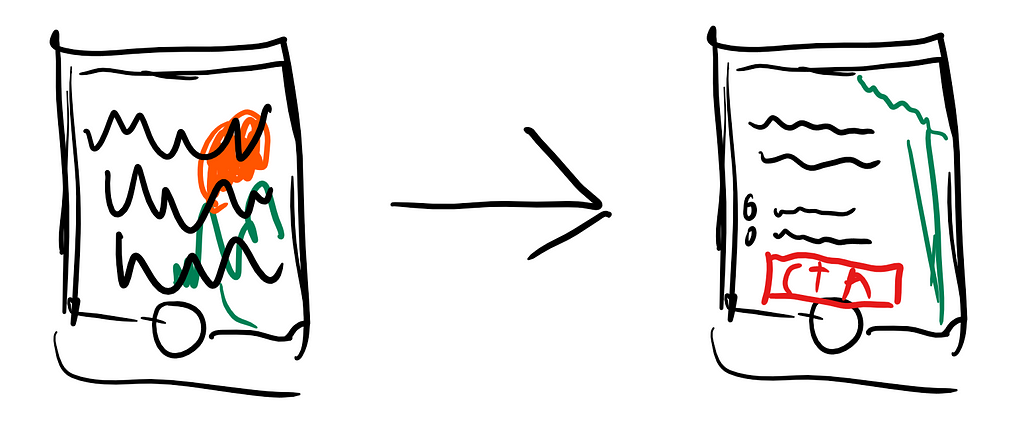
1. Move The CTA Above The Fold

“The Fold” is basically refering to the line of where the “first view” ends, and the rest of the site begins.

You know how when you open a website and the first thing you see? Everything you can see before scrolling is “above the fold”.

Everything else is below the fold.

Moving your call to actionabove the fold is one of the easiest things you can do.. but it can also be one of the most powerful.

The god-father of growth hacking himself, Sean Ellis, implemented this for his site “Growth Hackers” and got a 700% increase in Email Signups from this simple change.

2. Optimize Your Mobile Layout

Forego the clutter that automatic responsive design leaves for most mobile pages, and change your key pages to look great on mobile.

It’s 2019, more than 2 years since mobile overtook desktop for browsing the web, and still, a surprising amount of sites are not optimized for mobile.

More than 70% of all media time is spent on mobile, which means your mobile design should be an even bigger priority than how your landing pages look on desktop.

Make sure that your value proposition is fully legible, and that your background pictures end up looking okay & not compromising the readability of your content.

Hubspot increased their conversion rates on mobile by 10.7% by implementing a few key changes to their mobile layout.

3. Implement Single Keyword Ad Groups & Relevant Landing Pages

Single Keyword Ad Groups (or SKAG for short) is not a new principle within SEM, but it is routinely overlooked by in-house marketing teams and older agencies.

If you are using Google, Bing or other SEM ads, you need to stop being lazy with & make an effort to show users relevant content.

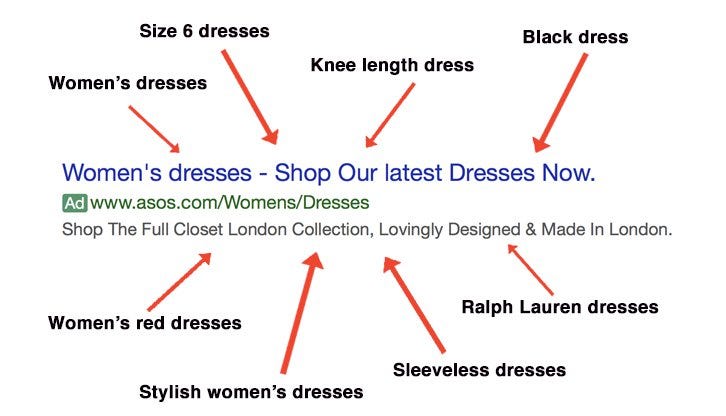
If you target multiple different broad keywords with one ad & one landing page, you are providing a bad user experience for your ideal customers.

This example from ConversionXL shows exactly what’s wrong with running a single ad to multiple broad keywords.

Think about the frame of mind people are when they turn to a search engine..

They want a specific solution to a specific problem, not a general category answer that might possibly contain what they want.

Implementing SKAGs has decreased CPCs by as much as 20% on client campaigns, and drastically decreased cost per lead and sale.

And I’m not alone in reporting these kinds of results.

The PPC agency clicteq cites implementing SKAG alone as increasing CTR by 14% and reducing CPA by 22%.

Sam Owen of Hanapin Marketing was able to reduce CPA by 50% and increase leads per month by 106% by implementing SKAGs.

4. Improve Site Speed

53% of mobile users will leave your site if it doesn’t load within 3 seconds.

And worse, after just one bad experience, 85% of users are unlikely to give your site a second chance.

Think about that for a second.

You only have 3 seconds to get your site fully in front of a potential customer, or you lose half of your potential customers.. forever.

So do what it takes to improve site speed.

The faster you do it, the fewer potential customers you will lose, and give a lasting bad impression while doing so.

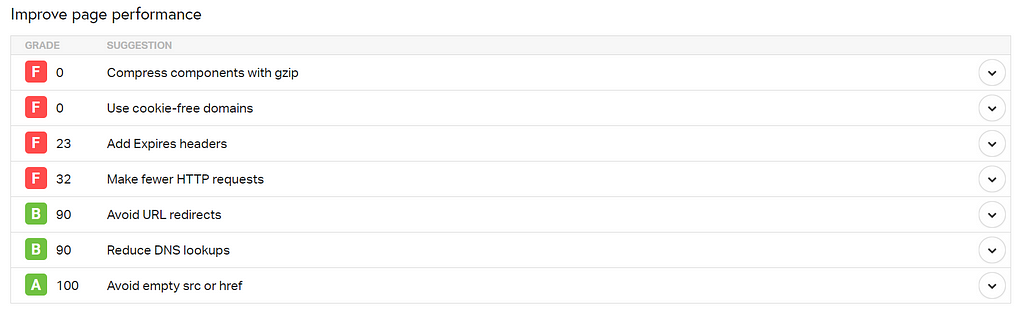
  1. Test your website speed with a tool like Pingdom, Webpage Test or gtmetrix.
  2. Look at your results, and Google how to fix individual problems that come up.

If you have never tried this before, you will typically get more than a few Fs, which are high ROI fixes to make, and usually fairly straight forward.

More Tips:

  • Implement a CDN for larger files like scripts & images so the user gets the content served from a closer server. (For example AWS’ CloudFront or MaxCDN).
  • Reduce the size of your image files by smushing them, re-sizing or otherwize optimizing.
  • Upgrade your hosting to get better load speeds. (If your results show a long “wait” time during testing your page speed, this is typically an indicator that your server is slow.)

5. Make Sure You Implement Sound Copywriting Principles on your Landing Pages

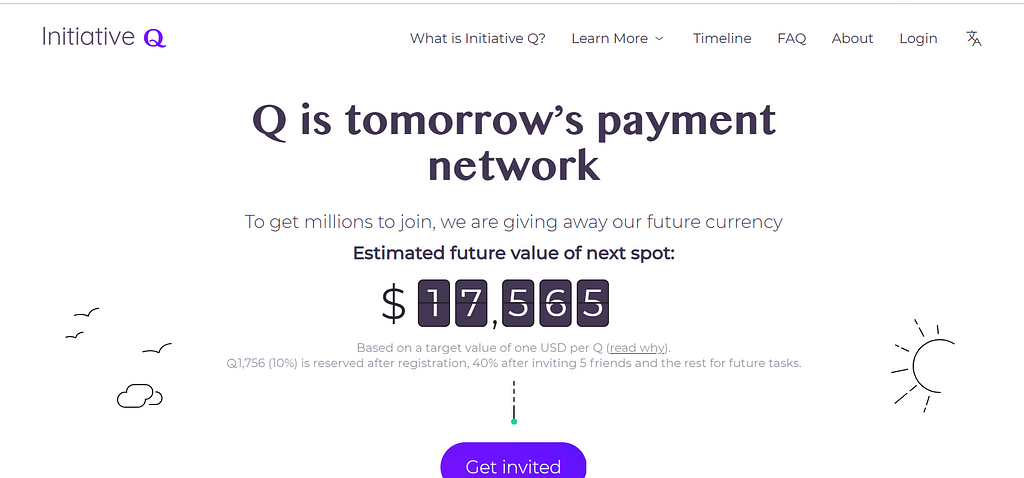
The story of Initiative Q is the single greatest modern lesson in the power of copywriting… period.

Initiative Q touts itself as “tomorrow’s payment network”, and has since launching their invite-only beta managed to drive millions of sign-ups organically.

But to a marketer, that’s not the real story here.

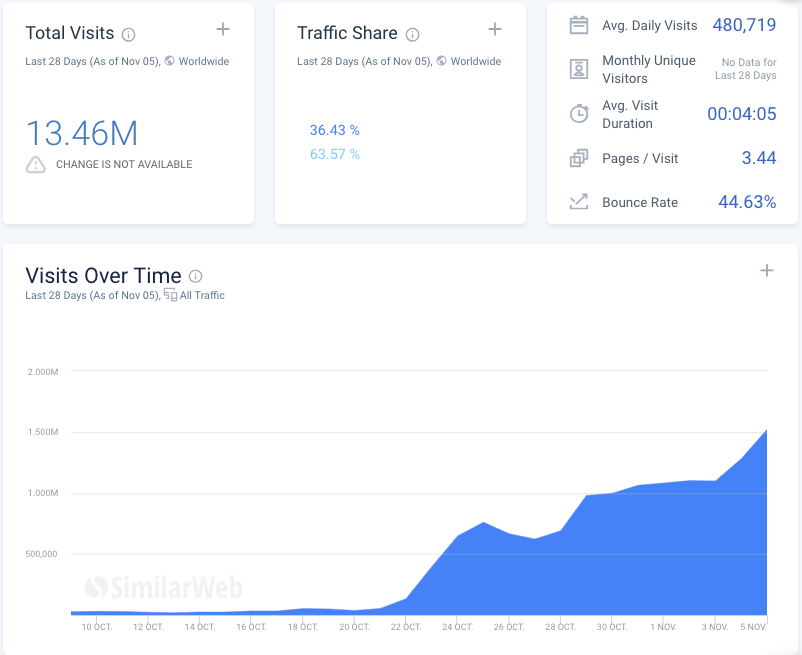
The truth is, it didn’t take off immediatelly after opening the beta… the curve was looking less like a bell or tsunami, and more like a flat-line after they opened doors.

This doesn’t look like the curve of the latest internet fantasy money craze, does it?

And then they implemented one key change.

They didn’t do anything technical like adding a viral loop (it was already in play), they simply optimized one key piece of copy; the invite message.

The old message tried to explain the idea in somewhat dry technical terms “building the currency of the future.. blablabla”.

Their new message, leverages many an important copywriting principle, from familiarity & trust, scarcity, the power of FREE and finally FOMO.

“Initiative Q is an attempt by ex-PayPal guys to create a new payment system instead of credit cards that were designed in the 1950s. The system uses its own currency, the Q, and to get people to start using the system once it’s ready they are allocating Qs for free to people that sign up now (the amount drops as more people join — so better to join early). Signing up is free and they only ask for your name and an email address. There’s nothing to lose but if this payment system becomes a world leading payment method your Qs can be worth a lot. If you missed getting bitcoin seven years ago, you wouldn’t want to miss this.
Here is my invite link:
https://initiativeq.com/invite/XXXXXXXXX
This link will stop working once I’m out of invites. Let me know after you registered, because I need to verify you on my end.”

Look at how they start of by using “ex-paypal” guys as a lever to buy some quick trust through leveraging a known brand in the space.. and ending in a climax leveraging FOMO(that is behind every craze from Tulip to Bitcoin).

OMR covered this story & did a great break-down of the old, vs the new copy and why it works so much better.

Also courtesy of OMR’s Story.

And as you can see, the new copy paid off.

They experienced an increase in web traffic by a magnitude of thousands, if not millions, and by extension, conversions as well.

Don’t just focus on the technical.

Make sure that your copy, that your story, does a good job in convincing your visitors that you have something to offer, that there is a compelling reason to choose you.

To write better copy, remember a few key points:

  • The customer doesn’t care about you or your company, but about how you can help them and whether or not they trust your ability to do so.
  • Customers have options, what is a specific benefit of doing business with you, and not someone else?
  • Give them a reason to take action NOW, not later. (Initiative Q does this brilliantly by in theory incentivizing fast movers exponentially more than late-comers.)

For more advice on tackling human inertia by writing great copy moving your visitors to action, read the following books:

More Learning, More Changes & More Chances

The keys to a better performing website are the same as the keys to better performance in every area of your life.

Learning, deliberate change & risk taking combined with dedication.. played out over time.

Are you dedicated to driving even better results for your website & business every day & week?

Do you want not only direction & inspiration but applicable tactics that will give you real results right away? Sign up for my newsletter.


5 Simple Changes That Can Drastically Improve Your Conversion Rate was originally published in Hacker Noon on Medium, where people are continuing the conversation by highlighting and responding to this story.

from Hacker Noon https://hackernoon.com/5-simple-changes-that-can-drastically-improve-your-conversion-rate-ad495cbf0a9c?source=rss—-3a8144eabfe3—4

How this Maker quit his job and made his side projects profitable in 1 year


Go to the profile of Product Hunt

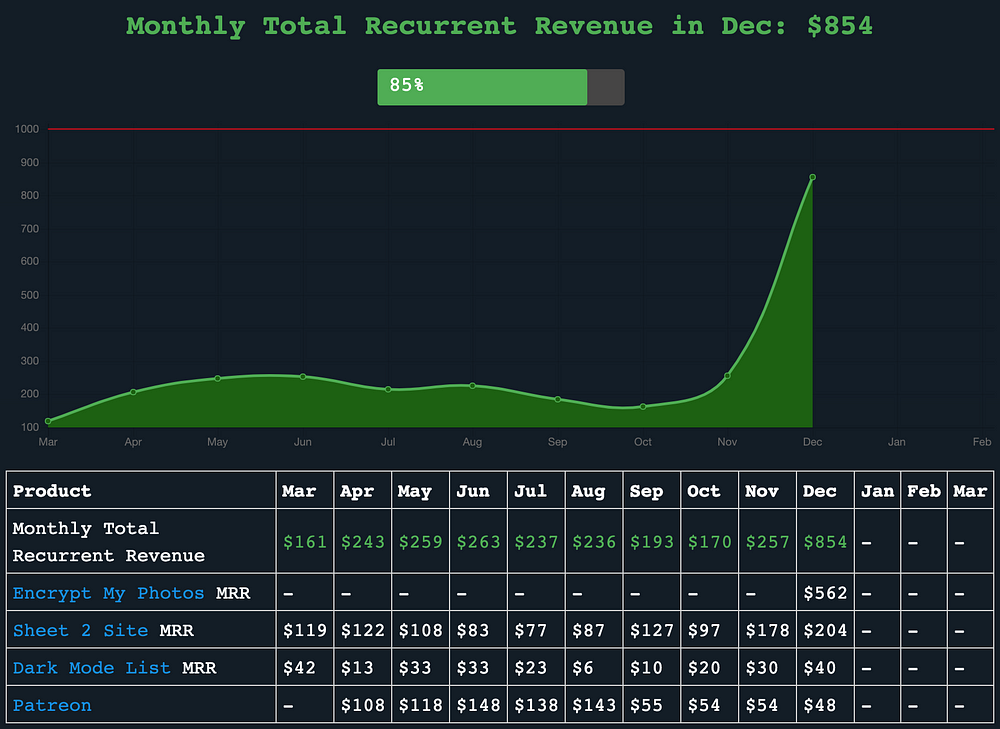
Last March, Andrey Azimov quit his job and gave himself one year to get to profitability as an Indie Maker. Since then, Andrey’s ‘Hardcore Year’ has been about shipping products like Encrypt My Photos, Progress Bar OSX, MacBook Alarm, Dark Mode List, and Preview Hunt — as well as getting to $1K per month in recurring revenue. 
 
Our friends at Blockstack talked to Andrey about his journey over the last year: 
 
Note: Andrey Azimov was also awarded a Product Hunt Golden Kitty Award for Maker of the Year last week! 😸🏆
 
Andrey, we love your ‘Hardcore Year’ effort. Can you tell us just more what inspired your desire to leave your job and generate recurring income?
 
I came to Bali May 2016. I met my ex-boss (Yaroslav Lazor, CEO of Railsware) at Dojo Bali, a co-working space. He offered me a job as a marketer and I worked for a year and a half in a great company with a smart people.
 
I was always passionate about making products and creating something that people would use. I dreamed to make some small side projects but couldn’t code and didn’t know how to start. Luckily I met Pieter Levels in December 2016 and he helped me to build my first app. It was a surfing web app that shows users the best time to surf (in the water — not online!).
 
The following year I launched three more apps. I did it all: the idea, the development, the marketing and sales. For me, that was more fun than working on just marketing for one product. 
 
And in March 2018, I decided to quit my job to follow my passion. I started a Hardcore Year — a one year experiment where I make apps full time and try to get $1,000 MRR (Monthly Recurring Revenue) to pay my bills. Back then, I felt scared and it was very risky, but I decided to listen to my gut and just did it. And it went pretty well — because now I don’t have to think about whether or not I should order juice with breakfast or not.

It looks as though you’ve been teaching yourself a lot of new skills this year. Which has been the most rewarding personally? And which has been the most helpful in accomplishing your goal of $1,000 MRR?
 
I think it was developing my “finishing muscle”. I finished all the projects I started and didn’t give up halfway.

Also, asking for advice from more experienced folks that have “skin in the game” helped a lot. 
 
On the topic of my MRR goal, EncryptMyPhotos took the #17 place in the App Mining Challenge, and made the most significant impact on my total MRR.

Among your various projects, what are some patterns you’re starting to see in terms of early indicators of success?
 
I think to start seeing some patterns, I need to have much more data (and experience). But after these nine months, I did discover some best practices that could increase a product’s chance of success. 
 
 For example:

  • Solve your own problems (so you will have at least 1 user).
  • Make products in existing markets. It means that the idea is already validated. Just make it niche and better at solving a small problem (again, a problem that you have personally).
  • Use the product yourself, share with friends (if this product logically makes sense to them) and see if they will use it!

What advice do you have for other folks that want to create additional income or work on something they are passionate about?
 
I think another reason to solve your own problems is because it’s fun for you. You’ll use the solution. Start small and niche.
 
It’s also always good to try to charge money for your products, because I think some of the best validation for a product is if people are actually paying for it. Another way is to join the App Mining Challenge so you can focus more on making things and not think about survival. 
 
 You recently submitted one of your products to our App Mining program. Were you interested in the world of crypto and decentralized applications before that?
 
No, I was more skeptical about it. There was a big crypto boom in 2017 in Bali. There were a lot of scams as well, so I didn’t dive into this topic until recently. When I had some free time, I tried to learn about the general blockchain concept, but nothing too serious.
 
I met Pierre-Gilles here in Bali. We had a lot of in common so we became friends and started working in the same café. One day he introduced me to Blockstack App Mining. I thought it could be fun and we decided to make something small that would solve our own problems.

What are the main differences in your mind when building a decentralized application vs. others you’ve worked on, or are there any?
 
I really like the concept of a decentralized setup where things are spread out from big companies like Google, Apple or Amazon and you don’t need to put all of your data into one basket.
 
Another thing with these services is that I have to do every little thing for the app setup –from the database, error messaging, user registration, etc. With Blockstack, it was done with a couple pieces of code and just worked. It was much more comfortable and a pleasure to use!
 
In your ideal world, what do you hope EncryptMyPhotos becomes in the near future and in the long-term?
 
Right now we have some basic functionality. It’s super simple but it works. And it seems like people like it because the app hit #1 on Product Hunt. Now we are thinking about how to optimize it for mobile, because a lot of our photos are taken from our phones, and it would be good if we could upload directly from mobile.

Want to get paid for your dApp? Register here for App Mining to be eligible for next month’s payouts. 👏

from Stories by Product Hunt on Medium https://blog.producthunt.com/how-this-maker-quit-his-job-and-made-his-side-projects-profitable-in-1-year-9c24ece56133?source=rss-b8b4445269d0——2